

.png?width=140&height=140&format=webp&quality=50)


Decoding International Laundry Symbols: A Simple Care Guide
Understanding Washing Label Symbols

Putting on freshly cleaned clothes feels good. They feel comfortable, confident, and ready for the day. That feeling can fade quickly when you check the care label and see unfamiliar symbols that look more like a code than clear instructions.
International laundry symbols use simple icons, such as wash tubs, triangles, squares, and circles, to indicate how garments should be washed, bleached, dried, ironed, or dry-cleaned. Because these symbols are standardized, they provide consistent care guidance regardless of where your clothing is made.
Following care labels is important for more than appearance. Proper laundry care helps fabrics last longer, prevents unnecessary damage, and reduces waste caused by early wear. Understanding clothing wash symbols helps you clean effectively while preserving the quality of your garments.
Lysol® Canada helps simplify international laundry symbols, making garment care feel straightforward and manageable. With the right knowledge, you can care for your clothes with confidence while keeping them fresh and clean.
How to Read Laundry Symbols
To understand laundry symbols, recognize each icon and how details such as dots or lines change its meaning. These symbols are as follows:
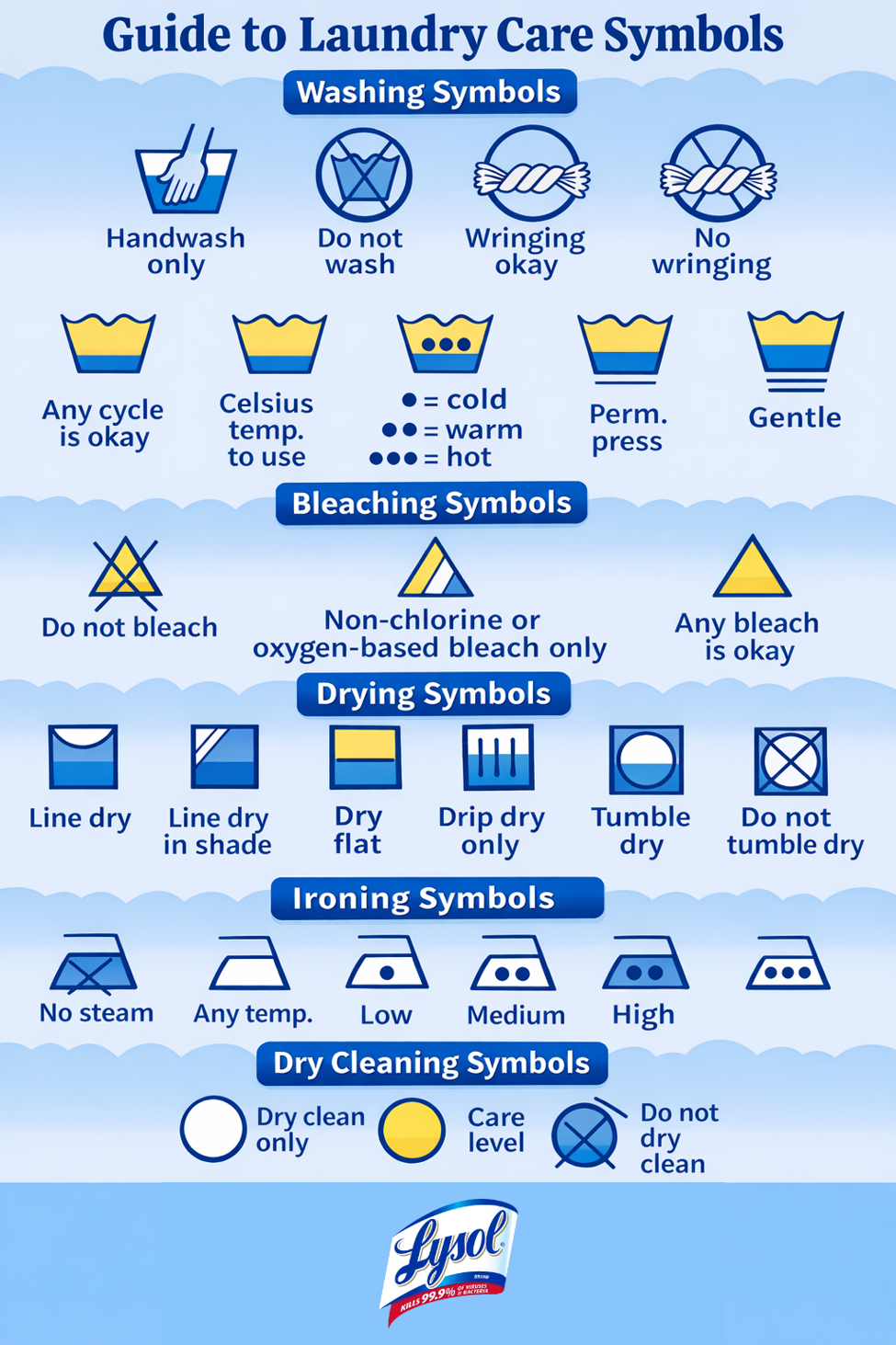
1. How to Read Wash Clothes Symbols
The washtub symbol tells you how a garment should be washed. An “X” over the tub means the item should not be washed at all, while a hand inside the tub indicates it should be hand-washed.
Many modern washing machines now include a gentle or delicate cycle that can be suitable for some hand-washable items. These cycles typically use lower water temperatures, usually 40°C (104°F) or below, to reduce stress on fabrics.
Handwash only
- Tub with hand: Handwash only.
- Silk or cashmere: Hand-washing is recommended instead of a delicate cycle to help prevent snagging or shrinking.
- Twisted cloth (like wrapped candy): Wringing is allowed.
- "X" over twisted cloth: Do not wring. Gently squeeze out excess water or use a towel to absorb moisture.
Machine washing
- Number inside the tub: Indicates the maximum wash temperature in Celsius.
- Dots inside tub:
- One dot: Cold wash
- Two dots: Warm wash
- Three dots: Hot wash
- Lines under tub:
- One line: Permanent press cycle
- Two lines: Gentle or delicate cycle
- No lines under the tub: Any standard machine cycle is safe to use.
2. How to Read Bleach Symbols
Bleach symbols may not appear on every care label, but when a triangle is shown, it indicates whether bleach can be used and which type is safe for the fabric.
- Solid triangle with an “X”: Do not bleach.
- Triangle with two diagonal lines: Use only non-chlorine or oxygen-based bleach.
- Plain triangle: Any type of bleach may be used.
Sometimes labels might not show a triangle but say “No chlorine bleach.” Oxygen-based bleaches (like Clorox 2, OxiClean, OXO Brite, Nellie’s Natural Oxygen Brightener) are safe except on wool, silk, or leather, which should never be bleached.
3. How to Read Dry Clothes Symbols
Drying clothes incorrectly can damage fabrics, cause shrinking, or lead to misshaping over time. International drying symbols help indicate whether garments should be air-dried or placed in a dryer, as well as the appropriate temperature and cycle settings.
Drying symbols are shown as a square. The details inside the square explain the safest way to dry each item.
Do not put in the dryer
- Drip dry only: Three vertical lines inside the square indicate hang-drying without wringing.
- Line dry only: A curved line inside the square indicates the item should be hung on a clothesline.
- Line-dry in shade: Two diagonal lines in the corner of the square indicate dry away from direct sunlight.
- Dry flat: A horizontal line inside the square indicates the garment should be laid flat to help prevent stretching.
Tumble dry settings
- Circle in the square: Tumble dry is allowed.
- One dot: Low heat
- Two dots: Medium heat
- Three dots: High head
- Lines under the square: Indicate dryer cycle type
- No lines: Any dryer cycle
- One line: Permanent press cycle
- Two lines: Gentle or delicate cycle
- Circle with an “X” inside the square: Do not tumble dry.
4. How to Read Iron Clothes Symbols
The iron-shaped symbol on clothing labels shows whether a garment can be ironed and which temperature setting is safe to use. Dots inside the iron indicate the appropriate heat level. If steam lines appear under the iron, it indicates that steam ironing is allowed. An “X” over the steam lines means steam should not be used.
Ironing temperature guide
- No dots: Any temperature is safe.
- One dot: Low heat, suitable for delicate fabrics such as silk or wool.
- Two dots: Medium heat, commonly used for synthetics.
- Three dots: High heat, appropriate for durable fabrics like linen or cotton.
5. How to Read Dry Clean Clothes Symbols
A small circle on a care label indicates that a garment should be dry cleaned. These items are typically made from fabrics that can be damaged by regular washing. If you are unsure how to care for the item at home, following the dry-clean symbol helps prevent shrinking, colour loss, or fabric damage.
Hand-washing tips
If hand-washing is recommended instead of dry cleaning:
- Use cold to lukewarm water; hot water can cause shrinking.
- Test water on a hidden area first to check for colour transfer or fabric reaction.
- Handle garments gently and avoid scrubbing or wringing to prevent damage.
Dry cleaning symbols guide
- Letter inside the circle: Indicates the type of solvent a professional cleaner may use.
- Bars under the circle: Show the level of care required; more bars indicate gentler handling.
- "X" over the circle: Do not dry clean.
Add Lysol® Laundry Disinfectant for extra protection
After understanding the care labels, the next important step is washing. For a more hygienic clean and added protection on top of your regular laundry routine, add a trusted laundry disinfectant, like Lysol® Laundry Disinfectant - Crisp Linen. Its formula kills 99.99% of viruses and bacteria that detergents may leave behind* without bleach, is gentle on fabrics, and works even in cold water.
*vs detergent alone; Always read and follow the label.
FAQs
What does the triangle symbol indicate in laundry care?
In laundry symbols, the triangle indicates the use of bleach. A simple triangle means any bleach can be used on the clothing item; a triangle with two diagonal lines permits only non-chlorine bleach; and a crossed triangle means no bleach.
What does the circle symbol used for dry cleaning represent?
A plain circle on a clothing care label means the garment requires professional dry cleaning. If a letter such as A, F, or P appears inside the circle, it provides additional guidance on which cleaning methods or solvents are appropriate. Lines under the circle may also indicate the level of care needed.
Why do some garments use dry-cleaning symbols even if they can be hand-washed?
Some garments include dry-cleaning symbols to help prevent damage such as shrinking, colour bleeding, or loss of shape. While hand-washing may be possible in certain cases, manufacturers often recommend dry cleaning to protect delicate fabrics and maintain the garment’s original condition.
What does the “do not dry clean” symbol look like?
The “do not dry clean” symbol appears as a circle with an X through it. This indicates that professional dry cleaning should be avoided, as the process may damage the fabric.
Why are international laundry symbols important?
International laundry symbols provide clear, universal care instructions that help prevent common issues like shrinking, fading, and fabric damage. Following these symbols helps extend the life, appearance, and quality of clothing.
Recommended Products


Related Articles
How You Catch a Cold
Knowing how it happens will go a long way in helping you prevent the spread of cold and flu.![Upside down laptop with a hand hovering over a laptop]()
Germs’ Favourite Hiding Places
Eliminating germs means you need to know where they're lurking.![Person lying in bed under a pink blanket appearing unwell]()
7 Tips to Help Fight the Flu
Simple measures your family can take to keep harmful germs and bacteria at bay.![Woman holding and embracing a child in a bright white room]()
How to Clean a Burnt Cooking Pot: Easy and Effective Methods
A cooking pot can accumulate burnt food, grease, and residue if not cleaned properly, which can affect the taste and safety of your meals. Learn how to clean a burnt cooking pot correctly, while avoiding common mistakes, to keep it ready for every use.![Bottom of a burnt and worn cooking pot]()
Allergies in the Air: Understanding and Controlling Them
Airborne allergens have a direct, profound impact on human health, causing an overreaction of the immune system. Lysol Canada dives deep into the allergies in the air and shares exclusive indoor allergy treatment options to create a healthier home environment.![A woman blowing her nose into a tissue outdoors]()
How to Prevent a Cold and Keep Your Immune System Strong
The common cold is a contagious viral infection that mainly affects the nose and throat but can also cause coughing, sneezing, and congestion. Lysol Canada explains how to prevent a cold, why it spreads easily, and how it passes through the air and surfaces.![Man holding his throat, wearing a scarf, and holding a mug.]()
How to Disinfect the Air: Keep Home Clean & Healthy
Modern, well-insulated homes trap pollutants, making indoor air often more polluted than outdoor air, resulting in compromised health. Lysol Canada explains how to disinfect the air to improve respiratory health, promote better sleep, remove odors, and more.![A woman putting on a protective face mask indoors.]()
Cold Symptoms: Early Clues Your Body Sends When Illness Begins
Cold symptoms cause tiredness, congestion, and discomfort from a viral infection affecting the nose and throat, spreading through the air and surfaces. Learn how they start, spread, and simple ways to manage them for quick relief.![A man blowing his nose into a tissue with his eyes closed]()
How to Clean Shower Head: Time-Tested Steps
From daily showers to hard water buildup, shower heads accumulate mineral deposits and bacteria over time, reducing water flow and compromising cleanliness. Learn how to clean shower head effectively and keep it performing at its best.![A person cleaning a shower head]()
How to Keep White Sheets White: Easy Care Tips That Work
Bright white sheets can transform your bedroom's look and feel, but keeping them that way requires the right care. Discover how to keep sheets white with simple laundry tips, stain-fighting techniques, and everyday maintenance.![A person holding clean white sheets]()
Measles Uncovered: What It Is, Causes, Symptoms, & Treatment
Measles is a highly contagious airborne disease that spreads when an infected person coughs, sneezes, breathes, or talks, releasing virus-containing particles. Lysol Canada explains what measles is, its causes and symptoms, and how to help you recognize it early.![A sick girl with a red skin rash on her face, resting with a stuffed animal.]()
Airborne Diseases: How Microbes Travel Through the Air
Are you concerned about germs, bacteria, viruses, and allergens that travel through the air, especially in crowded or public places? Learn what airborne diseases are and how they spread to keep yourself and your environment clean, safe, and hygienic.![Group of people sitting with face masks on]()
How to Clean a Slow Cooker for Spotless Shine
A slow cooker can harbor grease, food residue, and bacteria if not cleaned properly, which can affect the taste and safety of your meals. Lysol Canada explains how to clean a slow cooker effectively, common cleaning mistakes, & tips to keep it ready for every use.![A person is scrubbing a pot with a sponge under a running faucet.]()
How to Treat Dry Nose and Get Quick Relief Naturally
A dry nose is a common condition that can cause irritation, discomfort, and nosebleeds. Lysol Canada explains how to treat a dry nose, why nasal dryness happens, and simple ways to relieve it through proper care and daily habits.![A woman dabbing her eye with a tissue]()
How to Clean Bathtub Jets
Maintaining the cleanliness of your jetted tub is crucial for ensuring hygiene and prolonging its long-term performance. Here’s how to eliminate grime, bacteria, and buildup from the jets and surfaces.![A woman wearing gloves and cleaning a bathtub with a sponge while standing]()
Bathroom Cleaning Hacks
Say goodbye to stubborn stains, soap scum, and hidden germs with these surprisingly effective bathroom cleaning hacks you’ve likely never tried before.![A person wearing yellow rubber gloves using a cloth to clean a toilet paper holder]()
How to Clean Linoleum Floors: Step-by-Step Guide
Let Lysol® Canada guide you through cleaning methods and essential supplies to effectively remove dirt, stains, and grime from your linoleum floors to keep them spotless and shiny!![A person mopping linoleum floors]()
How to Steam Clothes
Are you rushing to get dressed only to find your clothes full of wrinkles and creases? Lysol Canada shows the proper way to steam clothes, helping smooth fabrics and keep your outfits looking their best.![A woman steaming a shirt with a steamer]()
![Gloved hand holding toilet brush over a toilet.]()
How Do You Clean Glass Shower Doors
Discover expert-approved tips for cleaning glass shower doors and say goodbye to stubborn water spots, soap scum, and streaks.![A woman wearing gloves and wiping glass shower doors with a cloth]()
How to Get Rid of Pink Mold in Showers
Struggling with stubborn pink mold in your shower? You're not alone. This blog offers quick and easy tips to effectively remove pink mold and prevent it from returning, courtesy of Lysol® Canada.![Pink and black suds mixing]()
How to Clean Toilet Ring Stains
Tired of stubborn toilet ring stains ruining the look of your bathroom? Here is the simple and most effective step-by-step solution to eliminate those unsightly marks for good.![A person scrubbing a toilet bowl with a toilet brush and toilet bowl cleaner]()
How to Wash Jeans
Jeans are a wardrobe staple: durable, stylish, and endlessly versatile. But improper washing can dull their appeal, so Lysol® Canada guides you through the best way to wash and protect your favorite pair.![Multiple pairs of jeans hanging out of a washing machine.]()
Best Way to Clean Faucet Heads
Learn simple steps to clean and disinfect your kitchen faucet heads, removing buildup and stains to keep them fresh and working smoothly with Lysol® Canada.![close-up of a woman's hand holding a dirty faucet aerator]()
How to Clean a Toilet Bowl
Lysol® Canada brings you step-by-step cleaning techniques to remove stains, eliminate germs, and maintain a fresh, hygienic, and sparkling bathroom.![Woman using a toilet brush to clean a toilet bowl.]()
Tips for Preventing Wrinkles in Clothes
Clothes can wrinkle over time, even before you wear them, but with a few simple habits, you can keep outfits looking neat and ready to wear. Learn how to prevent clothes from wrinkling and enjoy a polished look every day.![A top-down view of a wrinkled shirt.]()
How to Clear Toilet Blockage
Clogged toilet? Don’t panic—unclog it fast and keep your bathroom fresh and hygienic with Lysol® Canada.![Hands holding a toilet plunger by the toilet bowl.]()
How to Clean a Toilet Tank
A clean toilet tank means a fresher, more efficient toilet. Learn how to tackle hidden grime and germs with Lysol® bathroom cleaners for lasting freshness and hygiene.![Person holding a toilet valve in front of a toilet.]()
What Parents Should Know About Colds in Kids
Common colds can have a significant impact on children’s health, causing discomfort, irritation, and restless days. Explore Lysol's effective cold remedies for kids, plus practical tips to soothe symptoms and support a faster, healthier recovery at home.![A sick boy resting under a blanket while holding a warm mug.]()
Flu Symptoms, Duration, and Recovery
The flu can leave you feeling drained, uncomfortable, and out of routine. When experiencing the flu, people often wonder how long the virus lasts and when they can return to normal life. That is exactly what Lysol Canada explains, along with flu symptoms, causes, and prevention tips.![Two people wearing face masks and blankets sit on a couch with cups.]()
How To Clean Stained Toilet Seat
Keep your toilet seat clean and hygienic. Discover easy steps to clean and disinfect commode seats effectively using trusted bathroom cleaners like Lysol® Hydrogen Peroxide Bathroom Cleaner.![A woman wearing yellow rubber gloves, cleaning the toilet seat with a cloth.]()
How to Clean Enamel Sinks Easily
Cleaning an enamel sink can be difficult if stains and buildup are allowed to accumulate, but Lysol® Canada makes it simple. Learn the best way to clean an enamel sink quickly to keep it truly clean.![Hands wearing rubber gloves cleaning the sink with a microfiber cloth in the bathroom]()
How to Clean Wooden Tables Easily
Discover step-by-step instructions and recommended products to keep your wooden table looking flawless for years to come!![A hand wiping a wooden table with a microfiber cloth]()
Bathroom Cleaning Checklist
Struggling with stubborn soap scum in your bathroom? Lysol Canada guide breaks down the most effective ways to clean soap scum from your bathtub, shower walls, and tiles.![A woman holding a book and placing her hand on a tile]()
How to Clean Baseboards
Learn how to clean baseboards quickly and effectively. This guide shares easy methods and top cleaning products to remove dust and grime, keeping your home looking fresh and polished.![a person cleaning baseboard with a microfiber cloth]()
Simple Tips for Softer, Fluffier Towels
Towels are mainly used for hygiene and comfort. They are soft and absorbent and are used daily to dry water from their bodies after washing or sweating. But over time, they can lose their fluff, freshness, and absorbency. Lysol® Canada shows you how to make towels soft again while keeping them clean and hygienic easily.![Rolled-up towels stacked in a shelf]()
How to Wash Dress Shirts
Dress shirts are a wardrobe essential for their sharp, sleek look and versatility. But improper washing can ruin their crispness and fit. Lysol® Canada shows you how to wash dress shirts the right way to keep them looking fresh and perfect, wear after wear.![Man holding white shirt near drying rack.]()
How to Wash Mattress Protector
Wondering how often you should change your pillowcase? This blog breaks down the ideal frequency for replacing your pillowcases and provides guidance on how to wash and disinfect them properly.![A person putting a white sheet over their mattress]()
Best Way to Clean Floors
Keeping your floors clean isn't just about appearance; it's crucial for a healthier and hygienic home. Lysol® Canada offers the best step-by-step guide to clean different types of flooring, from hardwood and tile to laminate and vinyl.![Man wearing headphones mopping floors]()
Best Way to Clean a Stainless Steel
Discover how to clean and maintain your stainless steel sink with expert tips and Lysol® Canada’s trusted cleaning products. Keep your sink spotless, hygienic, and sparkling!![A person wearing yellow gloves is cleaning the kitchen faucet with a sponge]()
How to Wash a Jersey
Whether you win or lose on the sports field, it is the sports jersey that takes the most hits with lots of dirt, dust, debris, stains, and bacteria. Here’s how to wash a jersey using Lysol® so it's not only clean, but also germ-free!![Top view of a person’s hand washing a jersey in soapy water.]()
How to Wash Down Pillows
When down pillows start to lose their freshness, the right cleaning methods can restore their comfort. Discover simple steps to wash down pillows and make them clean, fluffy, and like-new again.![Person putting a pillow into a washing machine]()
How to Remove Grease from a Stove Safely
Extended exposure to cooking oils, food splatters, and moisture often leads to stubborn grease buildup on stoves. Lysol Canada shows an effective way to remove grease from your stove, leaving surfaces clean, hygienic, and shining again.![Person wearing white gloves washing a stove with sponge and soap.]()
How to Shrink Your Clothes
Loose clothes can steal your confidence before you even leave the house. Lysol® Canada shows you how to shrink clothes correctly, ensuring they always fit well, stay fresh, and look new even after washing.![Woman holding a blue shirt on a hanger]()
Steaming vs Ironing: Key Differences to Consider
From business shirts to delicate dresses, wrinkles can affect any wardrobe. Lysol Canada explains the main differences between steaming clothes vs ironing so you can choose the right method for a smooth, presentable, and professional-looking appearance.![Person ironing clothes on an ironing board]()
How to Keep Your Toilet Smelling Fresh
Discover tried and tested steps to say goodbye to unpleasant smells and enjoy a constantly clean, inviting, and refreshing toilet with Lysol® Canada’s easy tips.![A woman wearing rubber gloves, covering her nose while cleaning a toilet with a toilet brush.]()
Best Way to Clean a Bathroom
Keeping your bathroom clean doesn't have to be overwhelming. In this step-by-step guide, we walk you through the most effective and efficient methods for tackling bathroom cleaning.![A woman wearing gloves cleaning a bathtub with a sponge]()
How Long Can You Leave Wet Clothes in the Washer?
Wondering how long wet clothes can stay in your washing machine before they start to smell? Lysol® Canada breaks down the facts and shares must-know laundry hygiene tips.![A woman carrying a basket filled with a large pile of clothes]()
Simple Ways to Restore White Socks
When white socks begin to look dull, the right techniques can bring back their whiteness. Discover simple methods to whiten white socks and make them look fresh, clean, and perfect again.![Person wearing dirty white socks and blue jeans]()
How to Clean Hardwood Floors Effectively
Discover the expert-approved techniques and the right products to clean hardwood floors without damaging their natural finish.![A person cleaning the hardwood floors with a mop]()
Best Ways to Disinfect Laundry
Are you worried about germs, bacteria, viruses, and fungi in your laundry that your detergent can’t eliminate, especially after an illness? Learn how to disinfect laundry effectively to keep your clothes clean and hygienic.![Person washing clothes by hand in soapy water]()
Effective Ways to Clean Bathtub
Transform your bathtub into a refreshing oasis with our easy cleaning guide, which suggests using Lysol® to remove grime, soap scum, and bacteria.![Person in yellow gloves cleaning bathtub with a sponge]()
How to Wash a Sleeping Bag
Sleeping bags can trap dirt, sweat, odours, and germs after every adventure. Discover how to wash a sleeping bag properly and keep it fresh, and hygienic with Lysol® Laundry Disinfectant.![Woman inside of orange sleeping bag with blue background]()
What Is the Purpose of Dryer Sheets?
Discover why use dryer sheets and learn how they help reduce static cling, soften fabrics, and add a fresh scent to laundry.![Woman loading laundry into a dryer machine]()
Understanding the Difference Between Cold and Flu
Cold vs. flu can leave you feeling drained, uncomfortable, and unable to carry on with your day. Lysol guides on how to tell the difference between the two, their symptoms, and tips to manage each illness for a quicker, smoother recovery.![Two people sitting on a couch wrapped in blankets while sneezing and drinking a hot beverage]()
How to Unclog Shower Drain
A clogged shower drain can disrupt your day and lead to lingering odours or slow drainage. Discover the most effective, step-by-step methods to unclog your drain using everyday tools and smart cleaning solutions.![Close-up of a metal shower drain on a clean white shower floor]()
Concrete Floor Cleaning
Do you want to make your concrete floors look brand new again? This blog offers guidance on the proper methods and effective cleaning solutions for efficiently cleaning concrete floors, whether indoors or outdoors.![A person wearing a glove and cleaning the concrete floor with a brush]()
How to Drain a Toilet Bowl
Learn how to drain a toilet bowl quickly and efficiently with Lysol Canada’s step-by-step guide, consisting of proven tips for hassle-free and hygienic maintenance.![Toilet in a modern bathroom]()
How to Clean Toilet Bowl Jets
Struggling with weak toilet flushes or stubborn stains under the rim? This blog dives into everything you need to know about cleaning toilet rim jets, helping you restore your toilet’s flushing power and hygiene with ease.![A person wearing a rubber glove is cleaning the toilet with a toilet brush]()
How to Wash a Comforter
When your comforter starts feeling less fresh, a proper wash can make all the difference. Learn how to wash a comforter to keep it clean, fluffy, and looking like new.![Woman holding her bed comforter.]()
Best Way to Remove Limescale from Toilet Bowl
Say goodbye to stubborn limescale in your toilet bowl with our easy, step-by-step guide. Learn how Lysol® bathroom cleaners can help you get a fresh and clean finish every time.![Gloved hands holding a toilet brush scrubbing a toilet.]()
How to Dry Jeans
When jeans start to lose their fit or colour, the way you dry them can play a big role. With a few simple drying tips, you can help keep your favourite pairs wearable and in good condition for longer.![Jeans hanging on hangers to dry]()
How to Clean a Dog Bed Properly
Dog beds can accumulate dirt, hair, and odours over time, but keeping your pup’s bed fresh and comfortable is easy with the right washing routine. Learn how to wash a dog bed properly using these simple tips from Lysol® Canada.![A dog is sitting on its bed.]()
How to Wash Football Gloves
Football gloves are essential for protection, grip, and performance, but improper washing can compromise their tackiness and durability. Lysol® Canada shows you the best way to clean football gloves to keep your favorite pair hygienic and fresh.![Front view of a goalkeeper's glove.]()
How to Remove Limescale from Bathroom
Limescale buildup can make your bathroom look dull and neglected. Discover a simple and effective method to remove limescale from showerheads, toilets, and tiles using Lysol®.![A hand using a sponge to clean the glass of windows in a bathroom]()
How to Clean a Door Knob
Discover Lysol® Canada’s simple guide on how to clean and disinfect doorknobs and handles. Learn easy steps to remove dirt, prevent rust, and eliminate germs to keep high-touch surfaces fresh and restored.![Person wiping a door handle.]()
How to Get Static Out of Clothes
Static cling can turn a great outfit into an uncomfortable experience, especially in dry weather or after a dryer cycle finishes. Lysol Canada explains how to remove static from clothes with simple, effective methods that keep fabrics soft, smooth, and static-free all day.![A man with a shocked expression staring at a shirt on a hanger]()
How to Clean Soap Scum
Struggling with stubborn soap scum in your bathroom? Lysol® Canada guide breaks down the most effective ways to clean soap scum from your bathtub, shower walls, and tiles.![A hand cleaning a surface with a sponge and foam]()
How Often to Clean Your Bathroom
Wondering how often you should clean your bathroom to keep it fresh and germ-free? Lysol® Canada breaks down the ideal schedule for the most important parts of your bathroom to help you maintain optimal hygiene.![Two women cleaning shower bathtub glass wall and shower faucet]()
How to Deep Clean a Glass Stovetop
Keep your glass stovetop looking sleek with our step-by-step guide to remove stains, burnt-on residue, and everyday grime without scratching the surface.![A hand in a pink rubber glove cleaning an induction stove top with a cloth]()
Best Way to Remove Hard Water Stains from Toilet
Learn how to effectively remove stubborn hard water stains from your toilet bowl using Lysol® Canada’s guide. With the right tools and tips, you can keep your bathroom fresh and stain-free with ease.![A woman holding a toilet brush cleaning the toilet bowl with toilet bowl cleaning solution.]()
How to Wash Bathroom Mats
Over time, bathroom mats can trap moisture, odours, and germs. Follow Lysol® Canada’s simple cleaning tips to help keep your mats fresh, disinfected, and safe for everyday use.![Bathroom shot with a freestanding tub, wooden cabinetry, and bathroom mat]()
How to Sort Laundry
Mixing colours, fabrics, and wash cycles can quickly turn laundry day into a disaster. Lysol Canada shares how to sort laundry the right way, keeping your clothes vibrant, fresh, and perfectly clean with every wash.![Woman holding a basket of laundry over her shoulder.]()
Bathroom Cleaning Tools
Find the essential bathroom cleaning tools recommended by Lysol® Canada to keep your space clean and fully disinfected. Get the must-have supplies for a healthier, hygienic bathroom.![A front shot of a Lysol Bathroom Cleaner Spray bottle on a bathroom counter]()
How to Hand Wash Clothes
When daily wear leaves your clothes looking tired and dull, it’s time to give them gentle care. Lysol® Canada shows you how to hand wash clothes effectively, preserving fabric quality, colour, and freshness with every wash.![Person handwashing a white clothing item in a blue tub]()
How to Get Rid of Odor in Clothes
Fresh-smelling clothes should be part of clean laundry, but stubborn odors can sometimes linger even after washing. Whether it’s musty or sweat-soaked fabrics, Lysol® Canada shows you how to remove the stink from clothes and restore lasting freshness.![Woman holding a blue shirt and examining it closely.]()
How to Clean a Foggy Mirror
Say goodbye to foggy mirrors with our practical guide featuring Lysol® as a key solution to prevent moisture buildup while maintaining a clean, streak-free surface.![A man cleaning a bathroom mirror with a cloth and spray bottle]()
How to Wash Black Clothes
Black clothes are timeless for their bold style and elegance, but washing them the wrong way can cause fading and dye transfer. Lysol® Canada walks you through how to wash black clothes properly, so they stay rich in colour, soft in feel, and stylish after every wash.![woman hand washing black shirt in soapy water]()
When to Change Your Pillowcase
Wondering how often you should change your pillowcase? This blog breaks down the ideal frequency for replacing your pillowcases and provides guidance on how to wash and disinfect them properly.![Woman inserting a pillow into a pillowcase]()
How to Clean Bathroom Tiles
Bathroom tile cleaning just got easier. Lysol® Canada shares simple, effective tips to clean and disinfect floor and wall tiles, helping you maintain a fresh, germ-free bathroom.![Woman wearing rubber gloves holding spray bottle and cloth to clean shower tiles.]()
What to Know About Getting Rid of a Cold
Colds are caused by viral infections, low immunity, and daily exposure to germs, leading to congestion, fatigue, and discomfort. Lysol explains how to get rid of a cold fast with simple ways, symptoms, and quick recovery tips.![Man in a knitted cloth coughs into his fist while holding a warm drink.]()


.jpg?width=1100&height=734&format=webp&quality=80)
_(1).jpeg?width=1100&height=734&format=webp&quality=80)


Show 1 of 81